Discover the Fundamental Concepts Behind Automated Trading Strategies
What Are the Fundamental Principles That Shape Automated Trading?
An automated trading strategy employs advanced algorithms to execute trades based on specific, well-defined rules, particularly within the cryptocurrency markets. This structured approach significantly boosts efficiency and substantially reduces emotional decision-making, which can often impede trading success. These strategies operate via specialised software that constantly analyses vast amounts of market data, executing orders independently. By harnessing technology, traders can make informed decisions without the emotional pressure typically associated with manual trading, thus ensuring a more disciplined and effective trading experience. This reliance on technology not only streamlines the trading process but also instils a sense of confidence among traders.
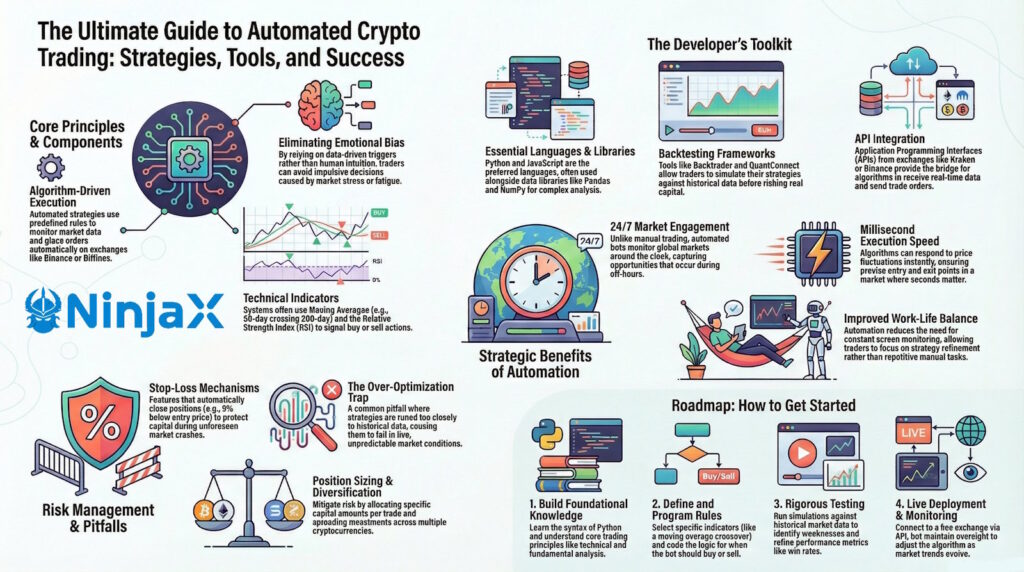

Leading trading platforms such as Binance and Bitfinex utilise these sophisticated algorithms to monitor real-time market conditions, enabling traders to react within milliseconds to price changes. By embracing automation, traders can stay engaged with the market around the clock, allowing them to trade even when they are not physically present. This highlights the transformative impact of technology on modern financial transactions and trading strategies, ultimately creating a more dynamic and responsive trading environment.
What Are the Essential Components That Characterise Automated Trading Strategies?
Automated trading strategies heavily depend on indicators such as moving averages and the Relative Strength Index (RSI) to facilitate informed decision-making in the rapidly evolving cryptocurrency landscape. By integrating these vital indicators, the automated system can execute buy and sell orders efficiently, minimising human error and promoting consistent trading practices. A standard strategy might program a rule to purchase Bitcoin when its 50-day moving average exceeds its 200-day moving average, effectively capitalising on potential bullish trends. This systematic approach eliminates emotional biases frequently encountered in manual trading, fostering a disciplined environment where decisions stem from data-driven analysis.
What Key Tools Are Necessary for Successful Automated Trading?
To implement effective automated trading strategies in the cryptocurrency realm, certain tools are crucial, including coding platforms and APIs. These tools enable users to backtest their trading concepts prior to engaging in live trading, ensuring that their strategies can adapt to the inherent volatility of the crypto markets. The essential tools for implementation include:
- Programming languages such as Python or JavaScript
- Backtesting frameworks like Backtrader or QuantConnect
- APIs provided by exchanges including Binance and Kraken
- Data analysis libraries such as Pandas and NumPy
- Cloud services for hosting and executing trading algorithms
By selecting the right combination of tools, traders can equip themselves to develop robust strategies that align with their investment goals while remaining adaptable to the dynamic and ever-changing landscape of cryptocurrency trading. This flexibility is essential for achieving long-term success in the fast-paced crypto market.
How Does Automated Trading Operate Within the Cryptocurrency Market?
What Mechanisms Enable Automated Trading Strategies to Function?
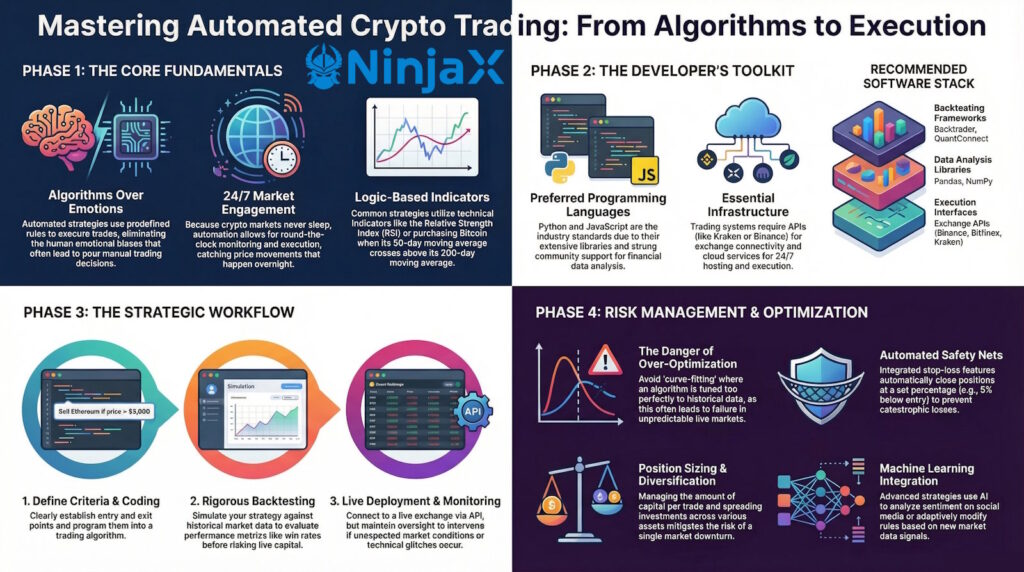
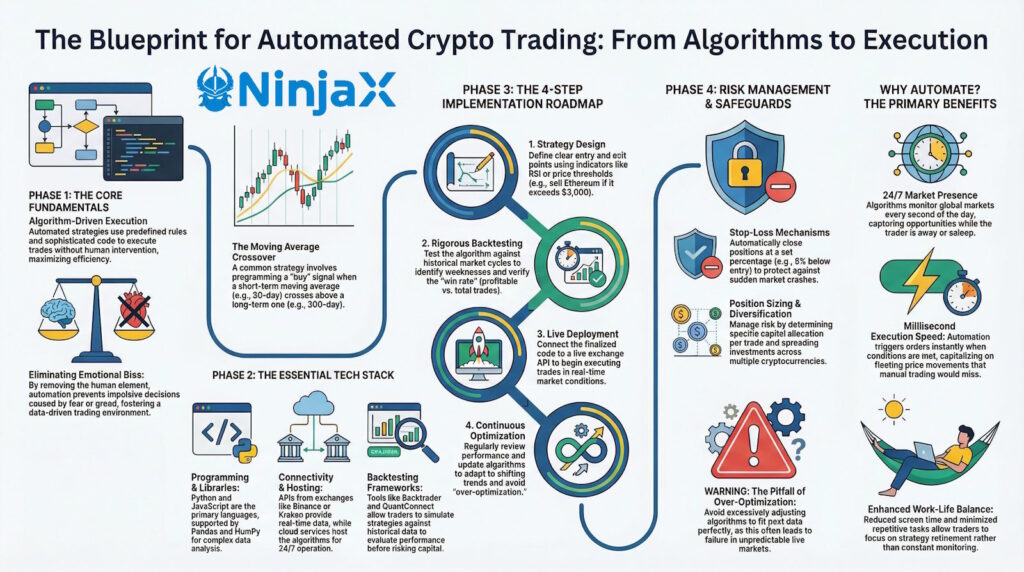
Automated trading strategies operate by processing real-time market data through advanced algorithms that trigger cryptocurrency trades when specific conditions are met, such as reaching defined price thresholds. This continuous operation allows for constant market monitoring without the need for manual intervention. For instance, if a trader programmes an algorithm to sell Ethereum once its price exceeds $3,000, the system will execute the trade immediately upon fulfilling that condition. This capability empowers traders to seize market opportunities that they might otherwise overlook, particularly during periods of high volatility when prices can fluctuate rapidly and unpredictably.
What Steps Are Necessary to Launch Automated Trading?
Users must programme specific rules into software that automatically executes cryptocurrency trades based on real-time analysis, ensuring timely and accurate execution. This process eliminates delays and enhances profitability through systematic trading methods. The initial step involves clearly defining trading criteria, including entry and exit points, informed by either technical indicators or fundamental analysis. Once these parameters are firmly established, the next phase is to incorporate them into a trading algorithm, followed by comprehensive backtesting to assess performance across various market conditions. By meticulously refining their algorithms, traders can maximise their trading potential across diverse market scenarios.
What Common Challenges Do Automated Traders Encounter?
Tackling challenges such as false signals in the cryptocurrency markets is crucial, as trading strategies must effectively navigate rapid price fluctuations. Developing an effective automated trading system necessitates the implementation of robust risk controls to ensure reliability. For instance, many traders integrate stop-loss features that automatically close positions to mitigate significant losses during unexpected market shifts. Furthermore, ensuring data accuracy is paramount; algorithms must receive precise and timely market information to function effectively. This underscores the importance of selecting reliable data sources and maintaining the requisite technological infrastructure for successful automated trading strategies.
Insights from Experts on Automated Trading Strategies in Cryptocurrency
Why Is Precision Crucial in Designing Trading Strategies?
Expert analysis highlights that precise algorithm design is critical for achieving success in crypto trading, as it significantly reduces potential losses. To optimise algorithms for managing market fluctuations, developers should focus on creating resilient algorithms that account for various market conditions. This includes not only programming basic trading rules but also employing advanced analytics to improve trading decisions. For example, integrating machine learning techniques can enhance predictive capabilities using historical data, enabling the algorithm to adjust dynamically to market changes. Establishing a solid foundation in coding and a thorough understanding of market mechanics are essential components in crafting effective automated trading strategies.
What Advanced Features Should Traders Incorporate into Their Algorithms?
In-depth trading strategies often include machine learning capabilities to improve prediction accuracy within cryptocurrency markets, providing traders with expert-supported enhancements. Real-world applications encompass trading algorithms that analyse price patterns and trading volumes to anticipate future price movements. These adaptive algorithms can adjust their trading actions based on new data signals, allowing for greater responsiveness to evolving market trends. Additionally, features such as sentiment analysis, where algorithms assess the tone of social media discussions about specific cryptocurrencies, can provide further insights into market behaviour, leading to more informed and strategic trading decisions.
How Can Traders Evaluate the Performance of Automated Strategies?
Experts recommend monitoring key metrics, such as win rates, in crypto trading to gauge a strategy’s effectiveness. This evaluation involves systematically comparing the number of profitable trades against the total number of trades executed. Furthermore, utilising historical data to refine performance is essential; by analysing past results, traders can identify patterns and anomalies that may inform future strategy adjustments. Tools that visually represent trade performance over time can offer valuable insights into an algorithm’s consistency and reliability. Continuous monitoring and adaptive modifications form the cornerstone of a successful automated trading strategy, enabling traders to respond effectively to market changes.
What Importance Does Risk Management Hold in Automated Trading?
Experts stress that effective risk management is paramount in automated crypto trading strategies to protect capital. This involves setting appropriate stop-loss levels designed to limit potential losses on trades. For instance, a trader might establish a stop-loss order at 5% below the entry price to guard against substantial market downturns. Additionally, diversifying investments by spreading capital across various cryptocurrencies can help mitigate risks associated with volatility in any single asset class. Real-world examples from market downturns illustrate that traders who implemented robust risk management strategies successfully preserved their capital and rebounded more quickly when market conditions improved.
What Role Does Real-Time Data Integration Play in Automated Trading?
Experts advocate for the utilisation of real-time data feeds in automated crypto strategies to facilitate prompt trading decisions. This integration involves connecting with APIs from cryptocurrency exchanges, which provide instantaneous updates on market prices, order book information, and transaction volumes. To ensure data accuracy and reliability, traders should establish backup systems capable of managing data outages and glitches, allowing the algorithm to operate seamlessly even during unforeseen technical issues. Such integration enhances overall strategy performance, enabling traders to react swiftly to market changes while ensuring that their systems function effectively.
What Are the Key Benefits of Automated Trading?
How Does Automated Trading Enhance Time Management for Traders?
Automated trading systems significantly save time by managing cryptocurrency transactions without the necessity for constant oversight, allowing users to concentrate on other important tasks. This operational efficiency increases overall productivity and reduces stress associated with manual market monitoring. Traders can configure their algorithms to operate independently, executing trades even overnight or during off-hours when they might miss profitable market opportunities. The following time-saving benefits illustrate the effectiveness of automated trading systems:
- The ability to execute trades at any hour, capturing sudden market movements.
- A diminished need for constant screen monitoring promotes a healthier work-life balance.
- Automated market condition analysis facilitates quicker and more informed decision-making.
- Minimised repetitive tasks enable traders to focus on refining their strategies and developing innovative approaches.
This enhanced operational efficiency not only contributes to a healthier trader lifestyle but also increases the potential for profits by maintaining continuous engagement with the market.
What Efficiency Improvements Can Traders Expect from Automation?
Automated trading enhances operational efficiency by executing trades rapidly in volatile cryptocurrency markets, thereby improving trading opportunities. Speed is crucial in crypto trading, where prices can change dramatically within seconds. Automated systems proficiently analyse market data to trigger trades instantaneously, ensuring that traders do not miss significant price movements. Since algorithms function without the fatigue or emotional strain that impacts human traders, they consistently maintain performance regardless of time or market pressure, thus enhancing overall trading efficacy. By continuously assessing market conditions, automated trading strategies can capitalise on fleeting opportunities that manual trading might overlook, leading to superior trading results.
What Is the Potential for Increased Returns Through Automated Trading?
Automated trading systems can effectively exploit cryptocurrency market trends to achieve higher profits by executing trades swiftly and efficiently. The ability to respond promptly to price fluctuations allows traders to optimise their returns by buying low and selling high more effectively than traditional manual trading methods. Moreover, automated trading strategies are grounded in data-driven decision-making, which can outperform conventional approaches and yield higher returns. For instance, a trader using a well-structured algorithm that operates during peak market hours can significantly boost their profitability compared to a trader who executes trades manually at irregular intervals. This methodical approach ensures that traders can consistently achieve favourable investment outcomes.
What Risk Management Features Are Embedded Within Automated Trading?
Automated trading incorporates essential built-in risk management controls, such as stop-loss mechanisms and diversification strategies, aimed at minimising losses during periods of high volatility in cryptocurrency markets. This systematic approach reduces human error and emotional decision-making, resulting in more stable and secure investment outcomes. For example, a stop-loss feature can automatically close a position when a specific price level is reached, thereby protecting against sharp declines while allowing for potential upside gains. Additionally, constructing a diversified portfolio across various cryptocurrencies can significantly mitigate risks associated with market fluctuations. Historical data from previous market crashes demonstrate that traders who implemented these risk management features often protected their investments far better than those relying solely on manual oversight.
How Does Automated Trading Facilitate Continuous Market Monitoring?
Automated trading systems perpetually monitor cryptocurrency markets and execute trades at any hour without necessitating user intervention. This capability captures fleeting opportunities in global markets, enhances responsiveness to real-time data, and increases potential profits while users rest. The always-open nature of cryptocurrency markets means that automated trading can adapt to the constantly shifting landscape, taking advantage of price movements that may occur during off-hours. This continuous operation ensures that traders remain competitive and can react to market changes without being tethered to their screens, providing peace of mind and improving overall trading performance.
Effective Strategies for Implementing Automated Trading in Cryptocurrency
What Are the Core Components of Reliable Automated Trading Setups?
Successful strategies emphasise the necessity of conducting thorough backtesting in cryptocurrency trading to ensure reliability and effectiveness. This process involves simulating trading strategies against historical data to evaluate their performance over time. Actionable steps for constructing strategies that withstand real-world market tests include defining clear entry and exit rules, establishing risk management protocols, and consistently updating algorithms in response to shifts in market dynamics. By laying a solid foundation through meticulous backtesting, traders can gain confidence in their setups and make informed adjustments as necessary. This strategy not only enhances the reliability of the approach but also fosters a disciplined trading environment prioritising data-driven decision-making.
How Can Risk Management Be Effectively Integrated into Automated Trading Strategies?
Effective automated trading strategies integrate critical risk management controls, such as position sizing. This approach entails determining the amount of capital to risk per trade, ensuring that no single position can adversely affect the overall portfolio. Real-world examples illustrate how traders employing effective position sizing can avert catastrophic losses during market downturns. Additionally, diversifying investments across multiple cryptocurrencies helps mitigate risks associated with specific assets. By implementing these risk management techniques, traders can significantly enhance the sustainability and long-term success of their automated trading strategies.
What Steps Are Crucial for Optimising Automated Trading for Sustained Success?
Experts recommend that traders continually refine their automated strategies with ongoing updates to maintain performance in the cryptocurrency markets over the long term. This process involves regularly reviewing algorithm performance and analysing shifts in market conditions. By incorporating feedback loops that enable continuous assessment, traders can adapt their strategies to evolving environments, ensuring they remain effective over time. For example, an algorithm that performs well during stable market conditions may require adjustments in response to sudden volatility. By adopting a proactive approach to strategy refinement, traders can maintain a competitive edge in the fast-paced world of cryptocurrency trading.
What Are the Initial Steps to Launch Automated Trading?
What Foundational Steps Should Novices Take to Begin Their Journey?
Beginners should acquire foundational programming knowledge to create effective cryptocurrency trading algorithms, starting with simple rules. This essential understanding facilitates the development of practical strategies for actual markets. For instance, familiarising oneself with Python syntax can enable traders to implement algorithms that analyse market data and execute trades via cryptocurrency exchanges. Additionally, learning about libraries designed for financial analysis, such as Pandas, can significantly enhance a trader’s ability to evaluate historical performance and refine their trading strategies.
What Actions Are Involved in Building Your First Automated Trading Strategy?
Begin by selecting key indicators for cryptocurrency analysis and testing them through simulations. This hands-on experience builds confidence and helps identify potential issues early in the process. For example, traders might initiate their journey with a straightforward moving average crossover strategy, programming the algorithm to buy when a short-term moving average crosses above a long-term one and sell when it crosses below. By applying this strategy in a backtesting environment, traders can assess its effectiveness and make necessary adjustments before deploying it in live markets, ensuring a robust foundation for future trading endeavours.
Why Is Comprehensive Testing Crucial for Automated Trading Strategies?
Thorough testing of automated trading strategies is imperative to ensure they perform effectively in real-world cryptocurrency scenarios. This critical step helps refine approaches before live use, minimising errors and enhancing the likelihood of success. Comprehensive testing validates strategies against historical cryptocurrency data, improving their reliability and success rates. This process allows traders to identify potential weaknesses in their algorithms and make informed adjustments. Moreover, consistent testing under varied market conditions can yield valuable insights into how well the strategy might adapt to future fluctuations, ensuring that traders remain prepared for the unpredictability of the cryptocurrency market.
What Is the Procedure for Deploying Your Strategy in Live Markets?
Once thorough testing is complete, it’s time to launch your automated trading strategy on a live cryptocurrency exchange platform. Continuous performance monitoring, real-time data analysis, and necessary adjustments are crucial for adapting to market volatility, managing risks, and optimising long-term profitability. This phase encompasses executing trades as well as diligent oversight; traders should be prepared to intervene if unexpected market conditions arise. Employing monitoring tools that alert to significant market events can further enhance the strategy’s effectiveness, allowing traders to stay engaged even as their algorithms manage the majority of trading tasks.
What Are the Potential Risks and Challenges in Automated Trading?
How Can Traders Identify Common Pitfalls in Automated Trading?
Recognising pitfalls such as over-optimisation in cryptocurrency trading is essential to avoid potential strategy failures. Over-optimisation occurs when traders excessively fit their algorithms to historical data, resulting in poor performance in live trading scenarios. This phenomenon underscores the importance of balancing complexity with practicality to achieve better outcomes. By focusing on fundamental trading principles and maintaining a clear strategy, traders can resist the temptation to pursue perfection and instead develop sustainable and effective trading approaches that endure over time.
What Strategies Can Mitigate Risks Associated with Automated Trading?
Implementing safeguards, such as diversification, serves as an effective strategy for mitigating risks in cryptocurrency markets. This proactive approach reduces potential downsides stemming from automated errors. For instance, by distributing investments across multiple cryptocurrencies rather than concentrating on a single asset, traders can lessen the impact of sudden market downturns on their overall portfolio. Additionally, applying robust risk management techniques, such as establishing strict stop-loss orders, can further help preserve capital during periods of heightened market volatility.
What Long-Term Sustainability Issues Should Traders Be Aware Of?
Addressing market adaptation challenges necessitates periodic updates to trading strategies, promoting long-term viability in crypto trading. The cryptocurrency market evolves rapidly, and strategies that once yielded strong performance may become ineffective as market dynamics shift. Regularly reviewing and adjusting trading algorithms ensures they remain relevant and effective amid new trends. Traders should actively incorporate feedback from ongoing performance analysis and adapt their strategies to account for emerging patterns, thereby enhancing the sustainability of their trading efforts over time.
- Consistent review of algorithm performance
- Incorporation of market trend analysis
- Testing strategies under varied conditions
- Utilisation of predictive analytics for timely adjustments
Frequently Asked Questions (FAQs)
What Exactly Constitutes an Automated Trading Strategy in Cryptocurrency?
An automated trading strategy in cryptocurrency employs algorithms to execute trades based on predefined market conditions, thereby enhancing trading efficiency and reducing emotional decision-making.
How Can I Develop an Automated Trading Algorithm?
To create an automated trading algorithm, begin with foundational programming knowledge, define your trading rules, backtest the strategy, and finally deploy it on a cryptocurrency exchange.
Which Programming Languages Are Most Suited for Automated Trading?
Python and JavaScript are among the most popular programming languages for automated trading due to their extensive libraries and strong community support in financial data analysis.
What Steps Should I Take to Backtest My Trading Strategy?
You can backtest your trading strategy by simulating trades on historical market data using specialised software such as Backtrader or QuantConnect to evaluate performance metrics.
What Risks Are Inherent to Automated Trading?
The risks associated with automated trading include over-optimisation, reliance on data feed accuracy, and the potential for substantial losses during market volatility if not managed properly.
What Are Some Common Indicators Utilised in Cryptocurrency Trading?
Common indicators in cryptocurrency trading include moving averages, Relative Strength Index (RSI), Bollinger Bands, and Fibonacci retracements, which assist traders in gauging market trends.
How Can I Effectively Manage Risk While Engaging in Automated Trading?
Managing risk in automated trading can involve setting stop-loss orders, diversifying investments across cryptocurrencies, and employing position-sizing techniques to limit potential losses on individual trades.
Is Automated Trading Suitable for Beginners?
Yes, automated trading can benefit beginners, but it requires a foundational understanding of trading principles, programming skills, and a commitment to learning through testing and refining strategies.
When Is the Optimal Time to Engage in Cryptocurrency Trading?
The best time to trade cryptocurrency can vary with market activity but often coincides with peak trading hours, when liquidity and volatility are higher, typically around significant market openings.
How Frequently Should I Update My Trading Strategy?
Regular updates to your trading strategy should be based on performance analysis, changes in market conditions, and emerging trends to ensure its ongoing effectiveness and competitiveness.
Connect with Us on Facebook for More Insights!
The Article Automated Trading Strategy Explained in Crypto Was Found On https://limitsofstrategy.com
The Article Automated Trading Strategy for Cryptocurrency Unveiled found first on https://electroquench.com